FUTURE
FLASHBACKS
Let’s start with a quick look back. Did we actually call it?
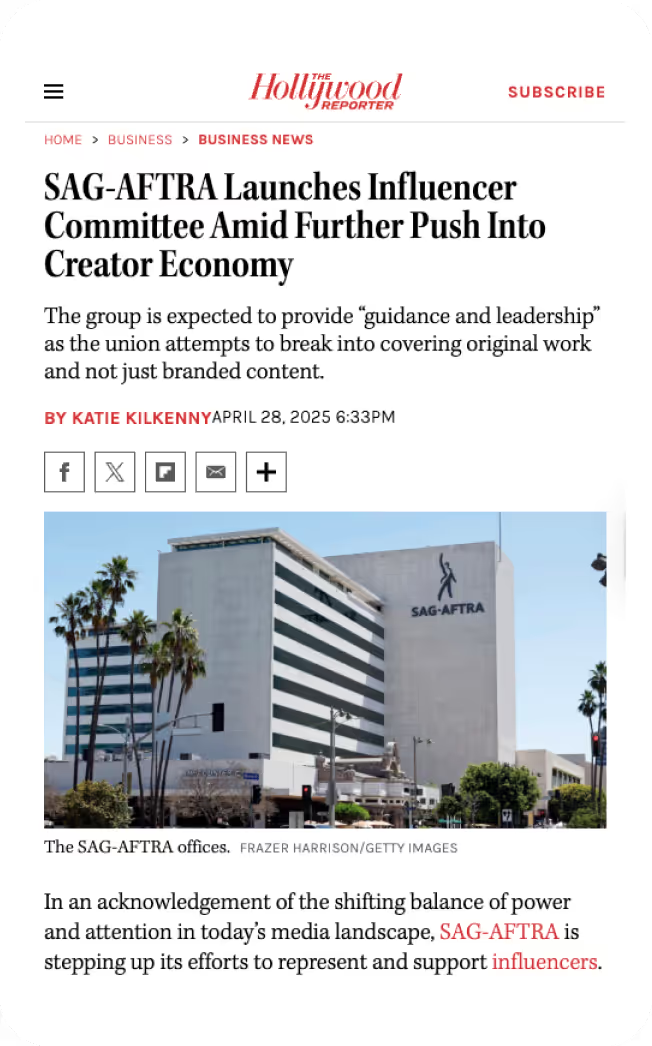
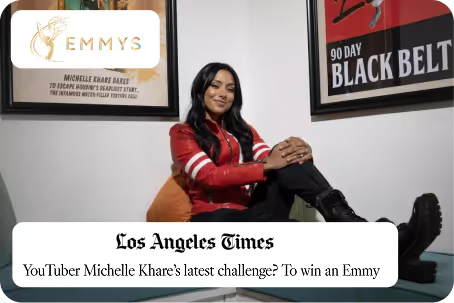
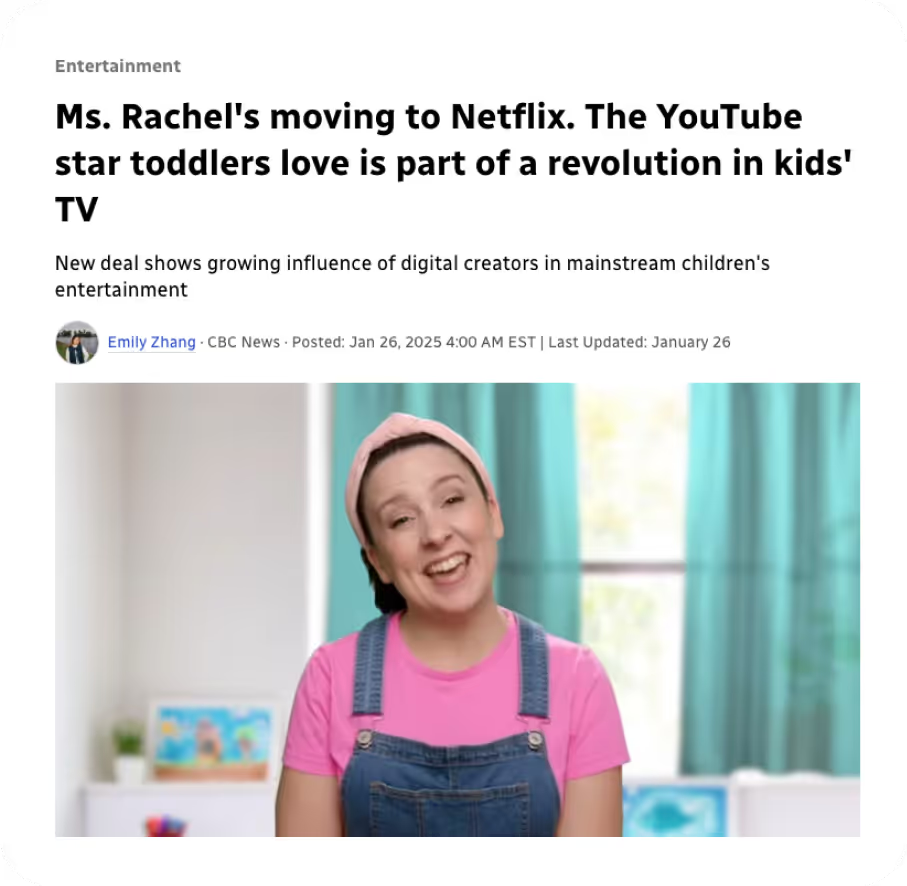
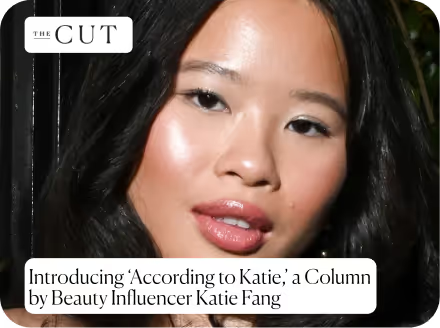
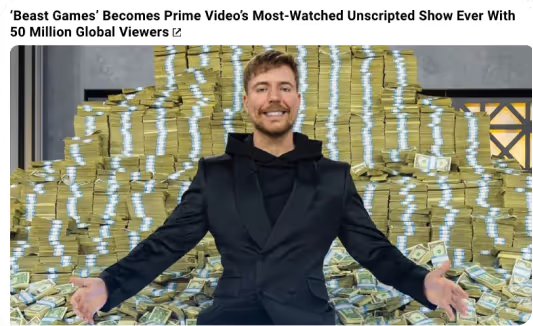
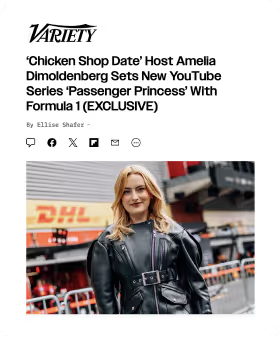
We said that creators would be the future of media. And guess what? This absolutely happened. Mr. Beast had the number one show on Amazon in over 80 countries globally. And creative voices started to land in legacy institutions. We also saw SAG-AFTRA embrace the creator economy with the creation of an influencer committee.
LONGFORM STORYTELLING
Long-form content accounted for 73% of all US viewing time (Feb 2025)
30-35% of uploads exceed one minute in length (+20% year before)
Average view duration per reel increased, especially on 45-90s videos
We spoke about the rise of long-form storytelling and it’s absolutely everywhere. Social series are dominating our feeds and view times on long form video are up across TikTok, YouTube, and Instagram.
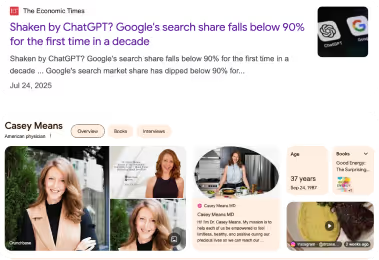
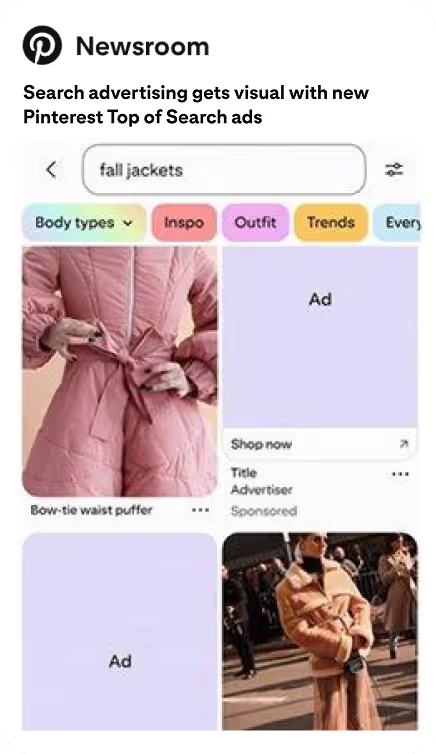
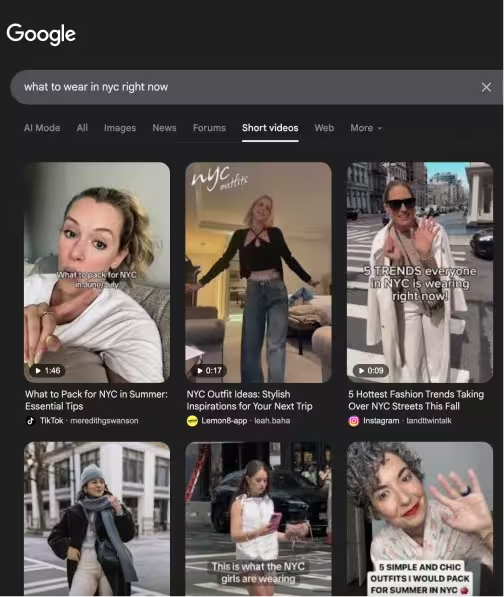
We said creators would be the new search engine. And for the first time this year, Google drop below 90% of market share when it came to search, driven by the growth of LLMs and social discovery. On TikTok, searches are up 40% year-over-year. And you can now use Google Lens in YouTube shorts to visually search what you're watching through that creator content. Discovery is progressively becoming more and more social.
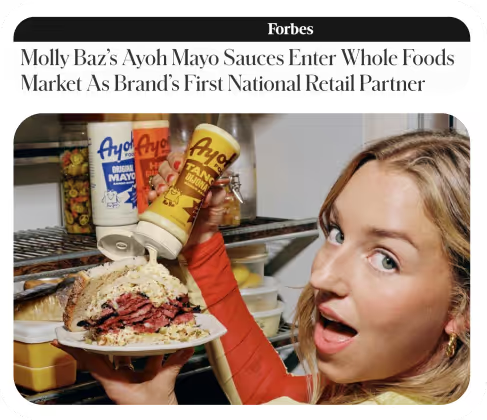
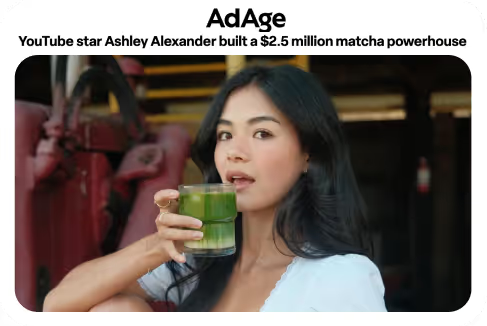
And what people were searching for, they started to buy. Social commerce really exploded this year. Mikayla Nogueira’s POV Beauty sold over a million dollars in the first eight minutes of launch. YouTube also added shoppable product stickers in shorts. And creators, they're not just helping sell your products, they're building and selling their own products, really becoming the rival to legacy brands in the categories like beauty and CPG.
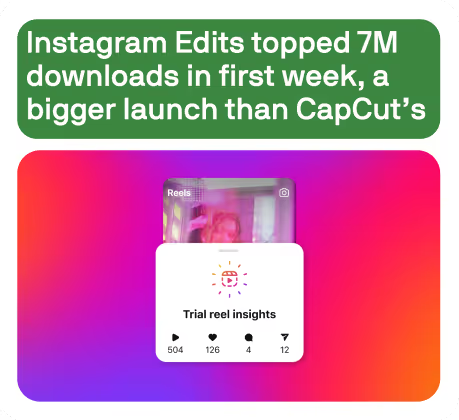
Across every major platform, investment in creators hit new highs. Meta's release of edits this year was downloaded over 7 million times in the first week alone, TikTok One was launched, and YouTube released a wave of creator-first tools just last month.
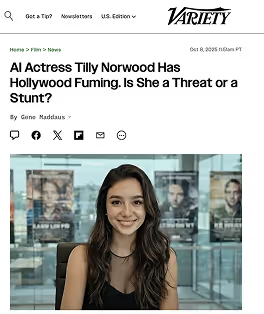
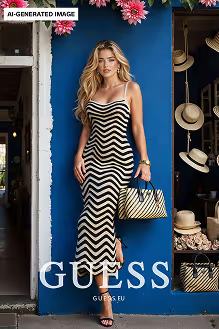
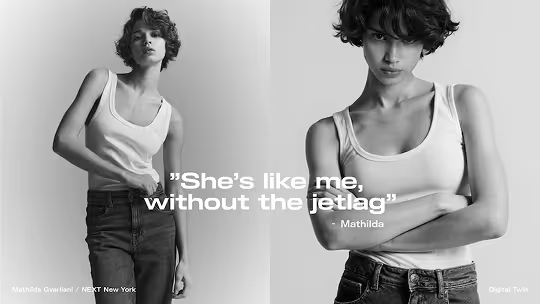
And finally, we said 2025 would be the year that AI creators go mainstream. And they did! From H&M's digital twin, to Hollywood's first-ever AI actress, this new expression of creators is quickly becoming part of pop culture.
LOW
HANGING
FRUIT
Creator Across Every Screen
Let’s start with some low-hanging fruit: trends that feel familiar and already underway. This is the warm-up before we get into the bigger, bolder bets.
CREATOR ACROSS EVERY SCREEN
Creators aren’t just part of marketing campaigns but are now core creative asset across every media touchpoint.
Creators are going to become the connective tissue that you'll see across every screen and every shopping surface. They're no longer confined to your social feeds. They'll be showing up in CTV, retail media networks, and even even commerce systems like Uber Eats.
CREATORS ACROSS CTV
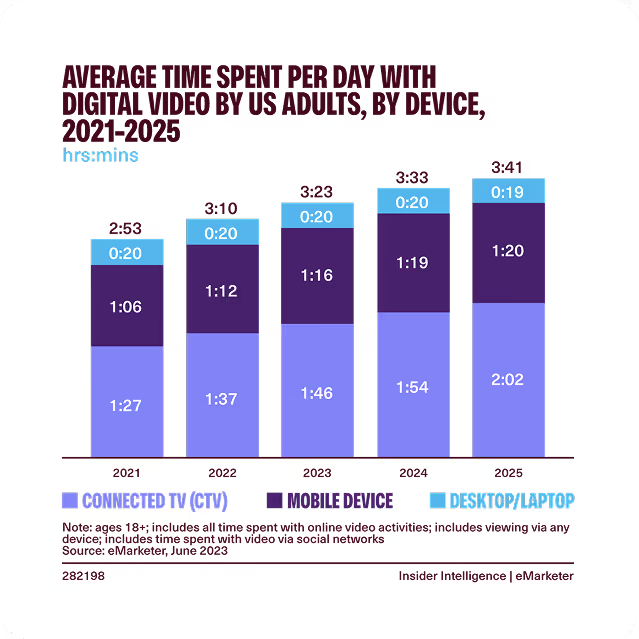
A few years ago, creator assets started to dramatically outperform brand assets on social. We're going to see the same pattern across CTV placements, too. Brands will lean on creators to bring their power and impact to spaces that were once reserved for “brand led advertising.”
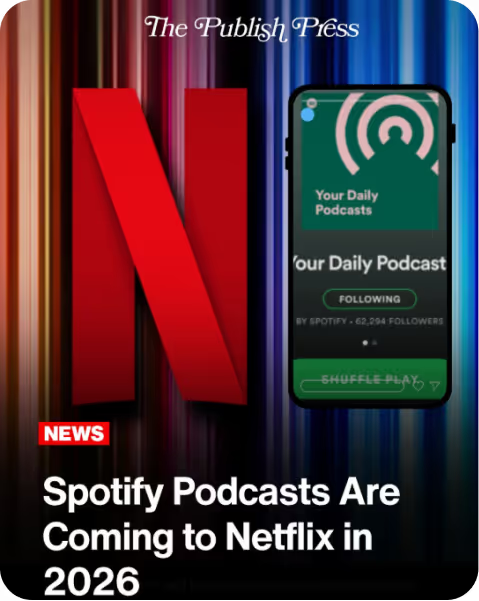
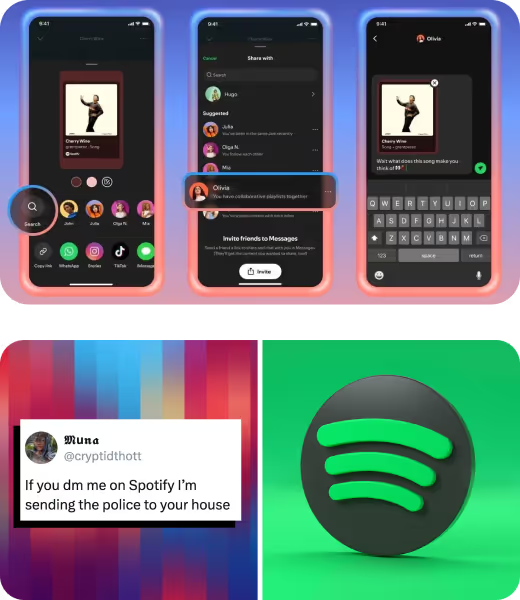
Next, we’ll see platform bleed. If you’re unfamiliar, this is when features and offerings unique to one platform start appearing across others. Netflix announced that you’ll be able to watch Spotify podcasts on Netflix in 2026. Spotify is becoming increasingly social with features that allow you to comment and DM other users. And Roblox now let's creators capture a live gameplay moment, export as vertical video, and share to social feeds. These trends reflect a broader truth: the future of content and commerce is social, and success will belong to the platforms and creators that harness interconnected, community-driven experiences.
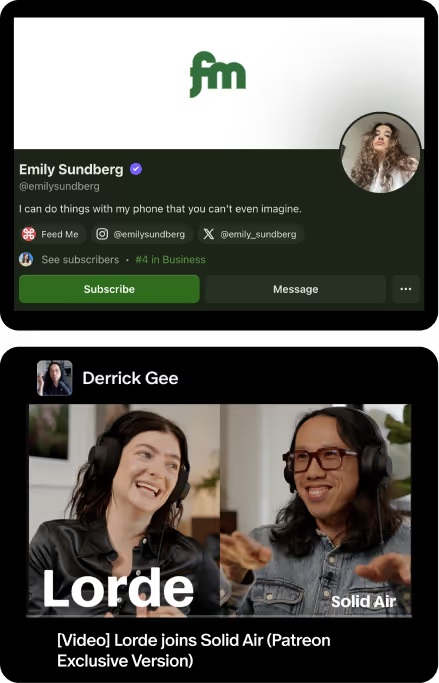
Direct-to-fan platforms like Patreon and Substack continued their rapid growth in 2025, empowering creators to monetize their audiences directly, in new and diverse ways. Patreon continues expanding, with over 300,000 active creators earning a combined $2B+ annually, showing consistent growth year over year. Substack reports steady increase in paid subscriptions, with tens of thousands of writers building sustainable revenue streams directly from audiences. The future of the creator economy isn't just about reach, it's about deep and meaningful engagement with their audiences.
NICHE AND NANO, RISE AND RELEVANCE
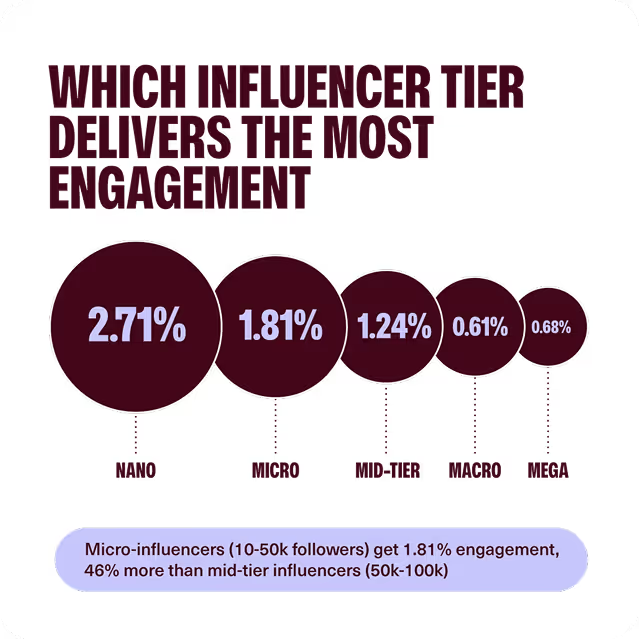
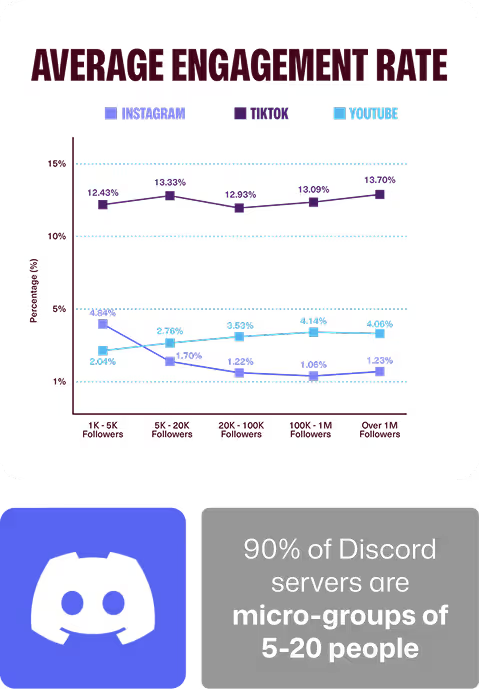
And to wrap up, nano and niche creators will rise in relevance. When we say micro and nano and niche, we really mean it—On Discord, 90% of Discord servers (Discord groups) are micro groups of 50 to 20 people. These communities have such deeply engaged audiences that they consistently drive high engagement rate for brands.
2026 PREDICTIONS
Next year power will shift to creators even further. Let’s dive into #paid’s 2026 predictions
2026 PREDICTIONS
NEXT WAVE OF CREATOR COMMERCE
One of the most challenging (and rewarding) parts about the creator economy is that it moves at the speed of light. It can be challenging to keep up, and really hard to understand what to do next. There’s no way to could cover everything happening in the space, but these are the 6 big moves we’re expecting for the creator economy in 2026. Let’s get into it!
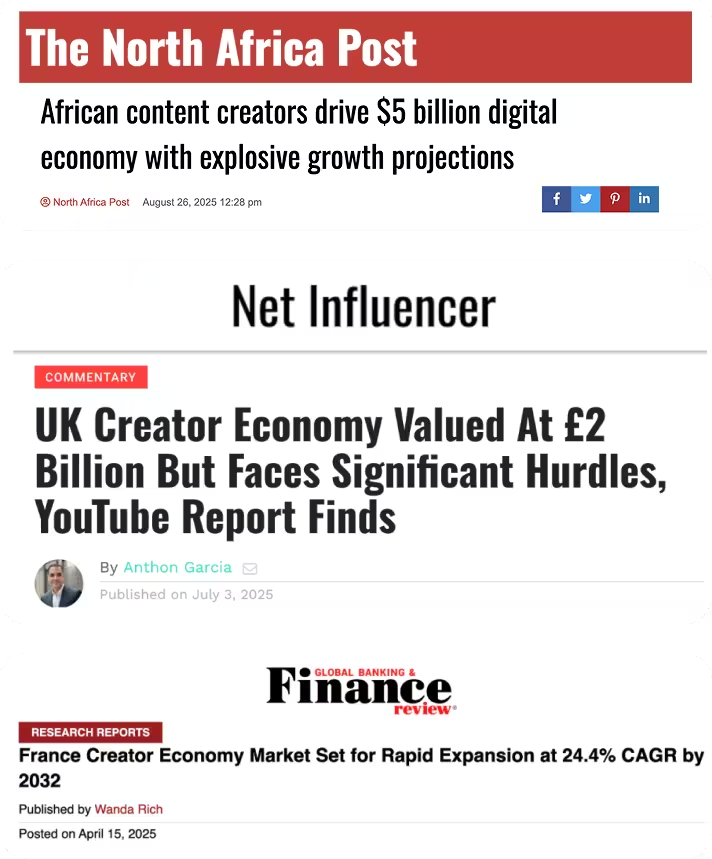
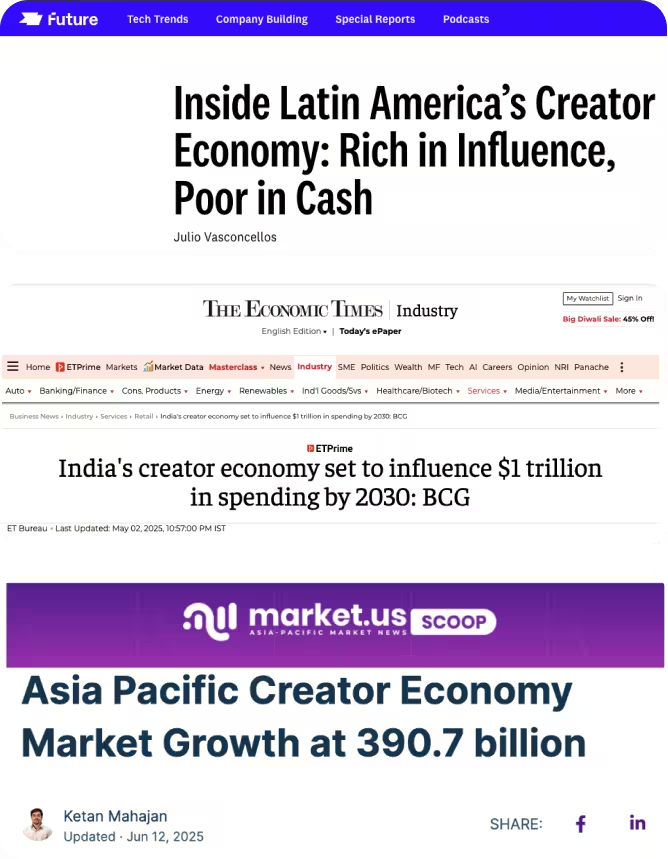
The creator economy is growing internationally at an astounding rate. This form of storytelling between creators and their audience knows no bounds. And it's about to get even more connected.
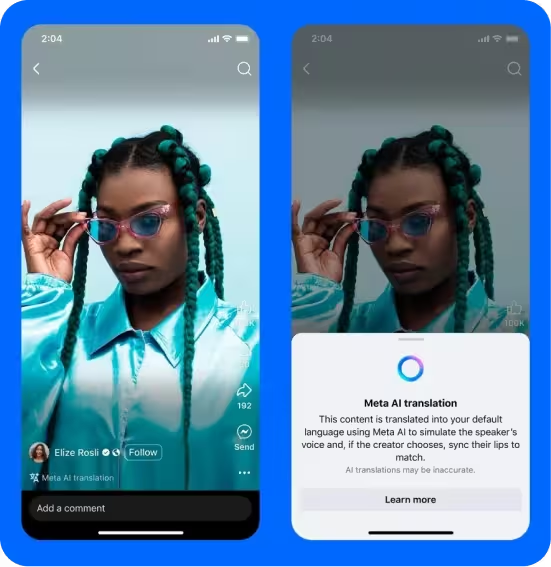
Over the past year, platforms like YouTube and Meta have rolled out AI-powered audio translation tools for creators. They can now take a single piece of content and instantly make it accessible in dozens of languages. For the first time, creators don’t need to speak the same language as their audience to build a shared community.
Audiences around the world are watching, they're engaging, and they're even starting to buy across borders. Will it be enough to connect with global communities? We'll find out in 2026. But data is already showing us that audiences are ready.
PREDICTION
Every social feed will include at least one creator you cannot understand without translation - and you’ll love them
So here’s the first prediction for 2026: Every single one of us will have at least one creator in our feed who we cannot understand without translation. And guess what? We’ll love them.
2026 is going to be the year of the Creator IRL. Creator-led experiences are becoming the new destinations, where people don’t just watch culture happen—they participate in it.
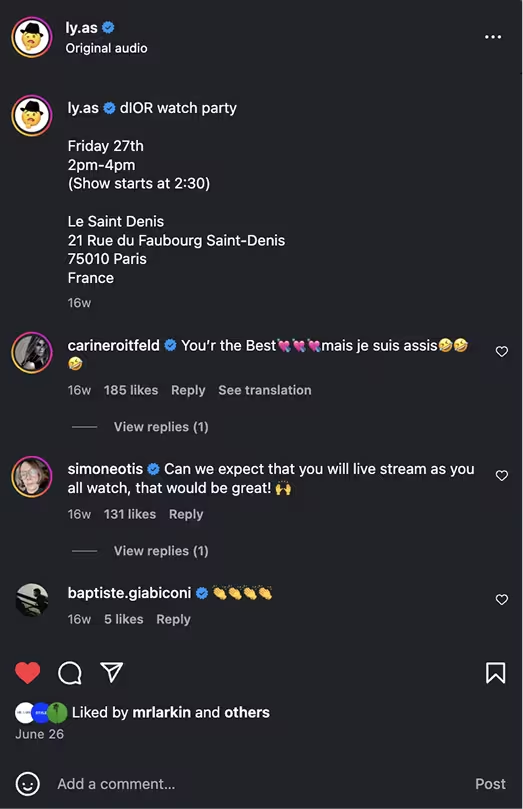
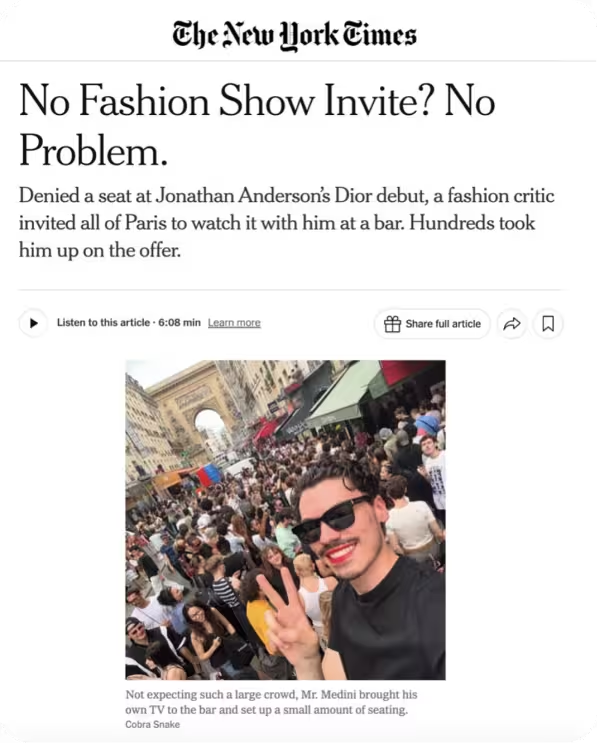
Let’s look at creator Ly.as. After posting an honest review of a Dior show, he didn’t get invited back. So what did he do? He threw his own show.
What started as a response to a missed invite became something a lot bigger. His events at Paris and Milan Fashion Week became the hottest tickets in town, and filled with industry insiders, fans, and creators alike. He turned a runway moment into an inclusive cultural movement. Ly.as is reshaping what it means to experience luxury, turning fashion from an exclusive runway moment into an inclusive cultural movement.
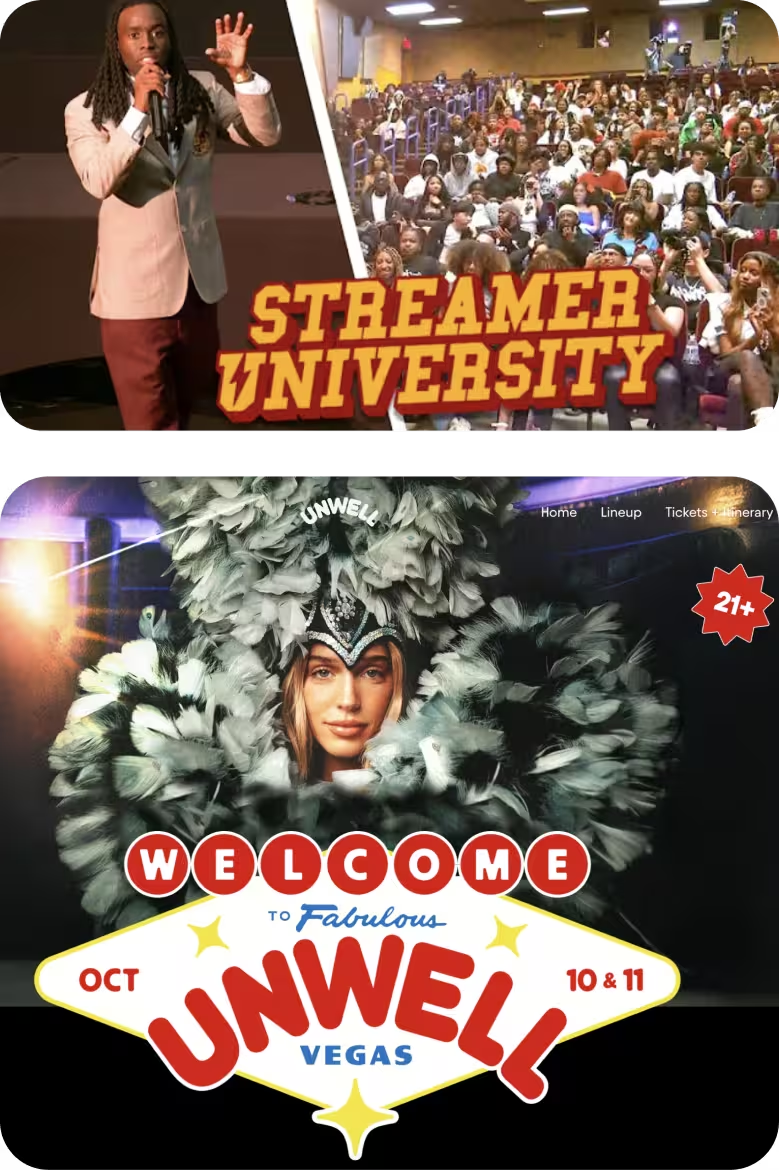
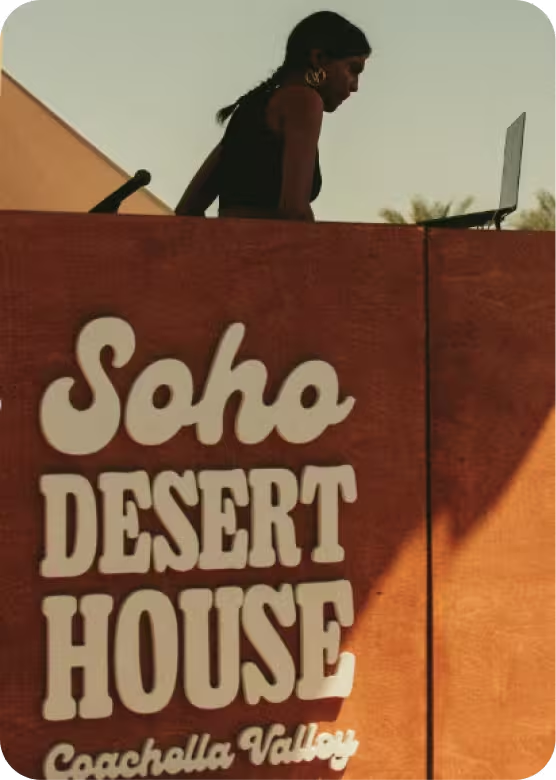
And it’s not just fashion. This year, we saw creators reimagining everything—from university classrooms, to two-day wellness retreats, Creators aren’t just building audiences anymore; they’re building destinations. Creators will become the focal point of major events.
PREDICTION
The most exciting experiences in 2026 won’t be run by legacy brand or media companies.
They’ll be built by creators who know how to
turn connection into culture.
Creators will become the new cultural curators, hosting the moments everyone wants a ticket to. Our next prediction: The most exciting experiences in 2026 won’t be run by legacy brands or media companies. They’ll be built by creators who know how to turn connection into culture.
For years, social content swung like a pendulum. From the era of perfectly polished, hyper-produced content, to the rise of raw, lo-fi, ultra-casual UGC. But that pendulum has started to slow down… and split.
INTENTIONAL IMPERFECTION
Storytelling that feels crafted, not generated

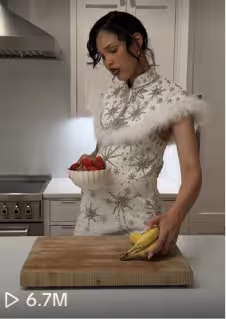
Audiences today crave intentional imperfection, slower pacing, tactile processes, and stories that feel crafted and not generated. You can see it in creators baking bread from scratch, filming on camcorders, and leaning into slow content.
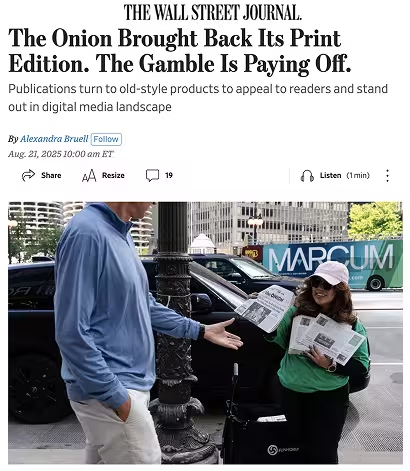
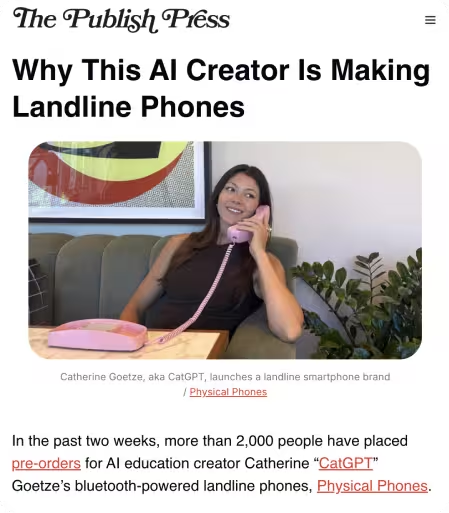
And we see it in the return of the analog, of things that feel made by human hands. The Onion brought back it’s print edition (50,000 subscriptions already!), and Creator Catherine Goetze's landline phones received over 2000 orders.
Analog is returning, but on the other side of the spectrum, something entirely different is happening—Synthetic storytelling.
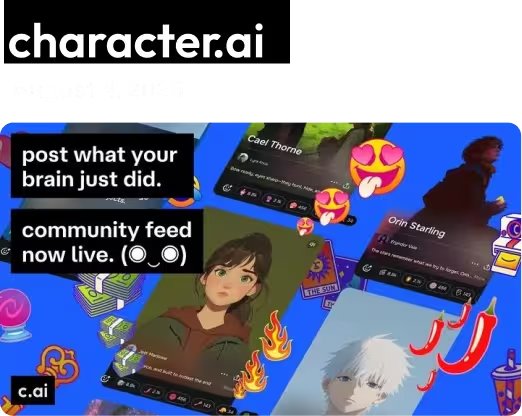
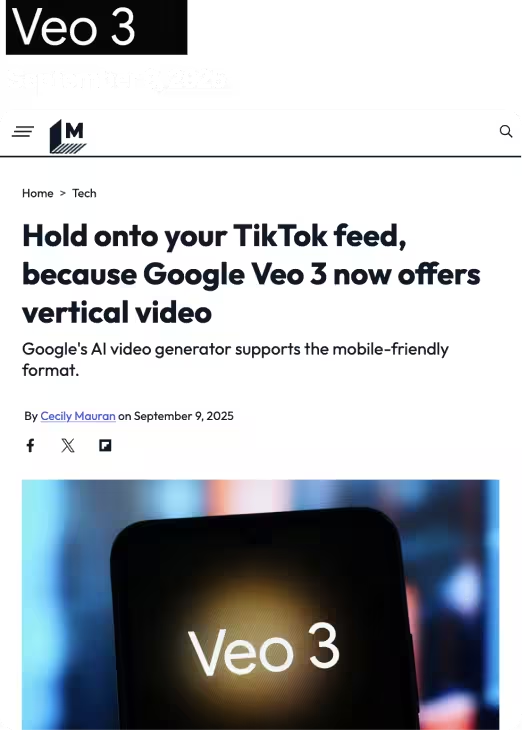
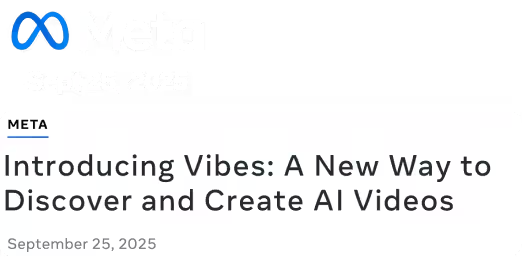
Just look at the technology that’s been released in the last few months: Character.ai released Community Feeds where human and AI creators now share the same social space. Veo 3 is now exporting cinematic verticals optimized for social. And Meta Vibes is giving creators AI tools to turn moods into motion.
And Sora 2, which dropped in late September, is already transforming what our feeds look and feel like, blurring the line between imagination and footage. As all this unfolds, what happens to social content?
PREDICTION
In 2026 social content will split in two directions:
In 2026, social content will split in two directions: fully synthetic and deeply human. And the magic will live in the middle, in how creators merge these extremes to define the next era of culture online.

NEXT WAVE OF CREATOR COMMERCE
Prediction No.4
Creators are turning audiences into participants, building destinations from classrooms to retreats and becoming the draw at major events. They’re not just making content; they’re curating culture and hosting the moments people want tickets to. The standout experiences in 2026 will be creator-run, not legacy-brand productions.
The creator economy is rewriting what it means to shop. We used to walk into stores. Now, stores come to us—inside our feeds from the people we trust most.
Next Wave of Creator Commerce
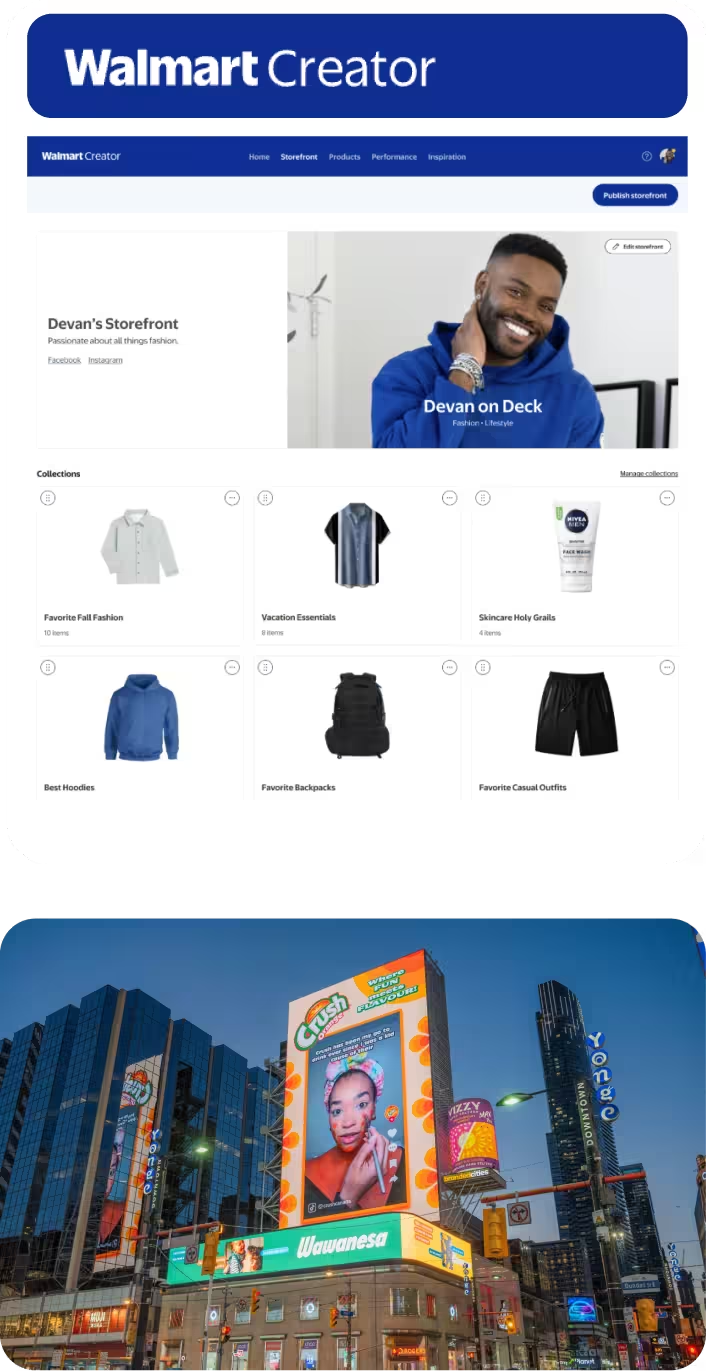
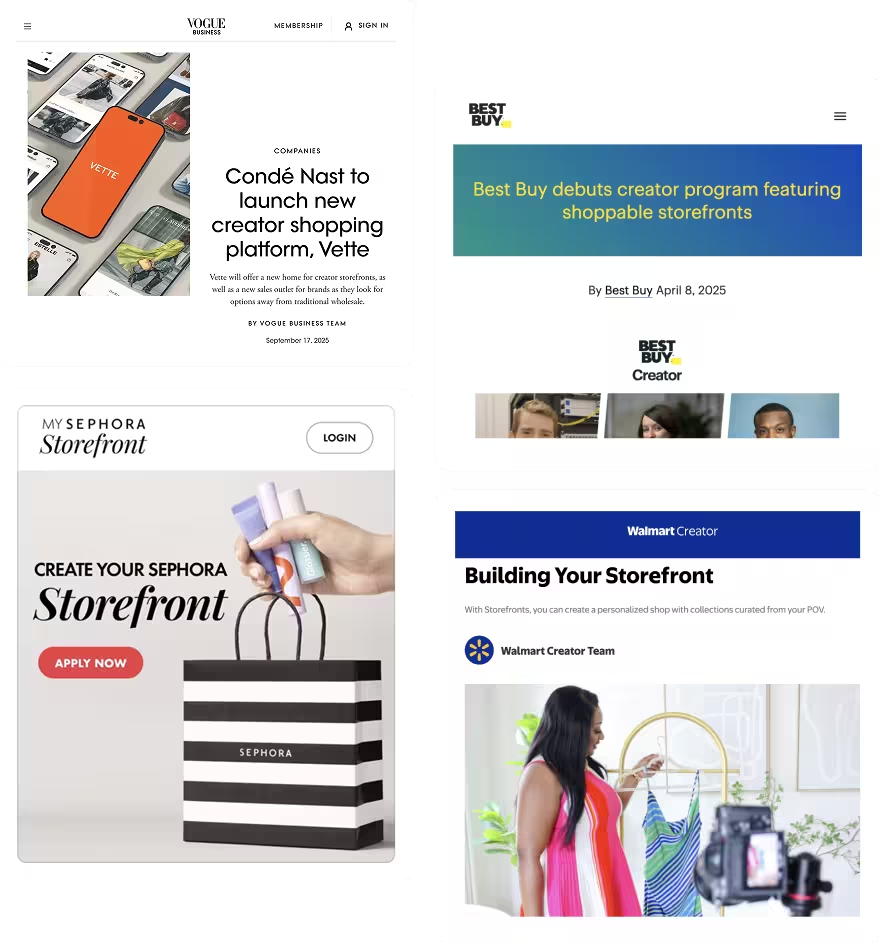
We’ve seen it start with creator storefronts from brands like Sephora, Best Buy, and Walmart. They’re giving creators the retail footprint that brands once dominated.
Next Wave of Creator Commerce
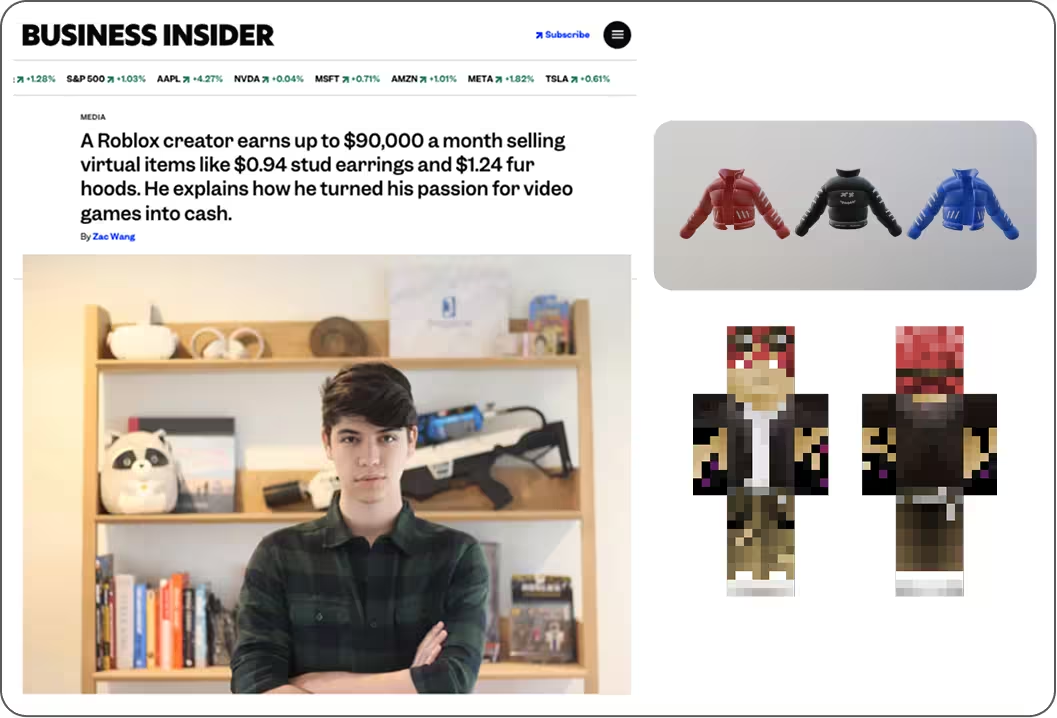
And it’s not just physical products, there’s an entire frontier of commerce focused on digital goods: Skins in Roblox, virtual merch in Fortnite, digital collectibles. Fans are leaning into digital offerings from creators.
Next Wave of Creator Commerce
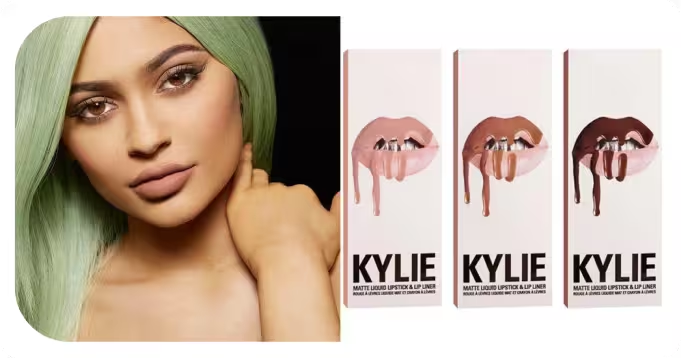
But what’s coming next? Agentic commerce. ChatGPT announced you’ll be able to directly shop from Shopify and Etsy (two of the original creator commerce platforms). Shopify is where Kylie Jenner built Kylie Cosmetics, and Etsy is where millions of independent makers built their dreams. Now, those worlds are merging with AI, where you can say “I want a candle like the one on Nara Smith’s feed” … and it just shows up. The lines between entertainment, information, and shopping are dissolving.
PREDICTION
By 2026 the distinction between content, commerce and community will fully collapse. The best place to shop won’t be a retailer, it will be your favorite creator’s feed.
The next time you’re scrolling, you won’t know if you’re watching, searching, or shopping. And honestly, it won’t matter. It’ll be seamless. The Prediction: by 2026, the distinction between content, commerce, and community will fully collapse. The best place to shop won’t be a retailer—It’ll be your favorite creator’s feed.
Creator content is no longer just influencing people—It’s influencing machines. And those machines, in turn, are starting to influence us.
CREATORS AS VALID SEARCH RESULT
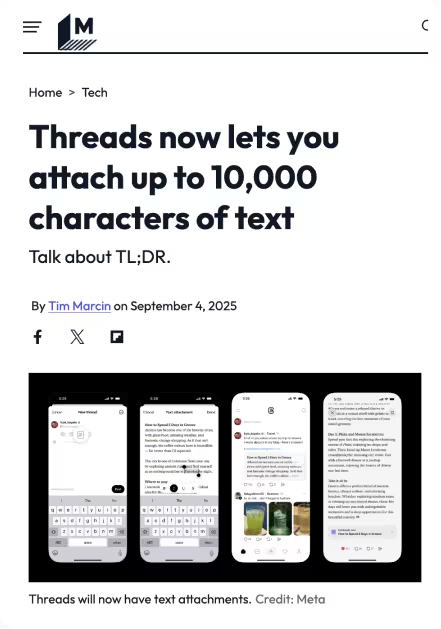
INCREASING CHARACTER COUNTS
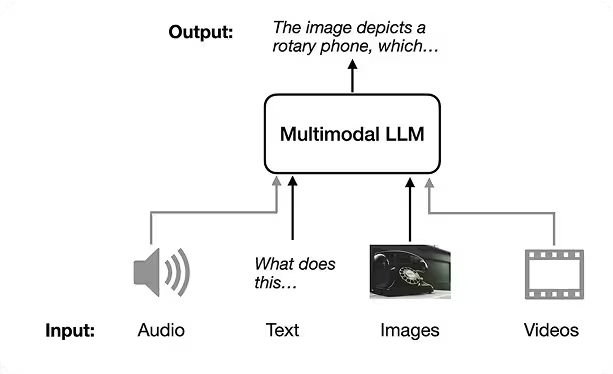
Rising prominence of Multimodal LLMs
Search is being rewritten. Much of today’s AI trains on text—captions, transcripts, and descriptions. When social platforms expand character limits, it’s not just to help creators write more—it’s to generate richer data for AI. More text means more context, and more context means higher visibility. Combined with multimodal LLMs that learn from audio, images, and video, creator content now feeds the entire training pipeline. Your influencer strategy could decide whether your brand is discovered—or ignored.
Jack Conte
Co-founder and CEO,Patreon
October 2025
This shift is igniting a whole new conversation around how creators should be compensated for their work and how their work is used.
AI POWERED AD DELIVERY
Smarter delivery.
Stronger performance.
Every dollar optimized by AI.
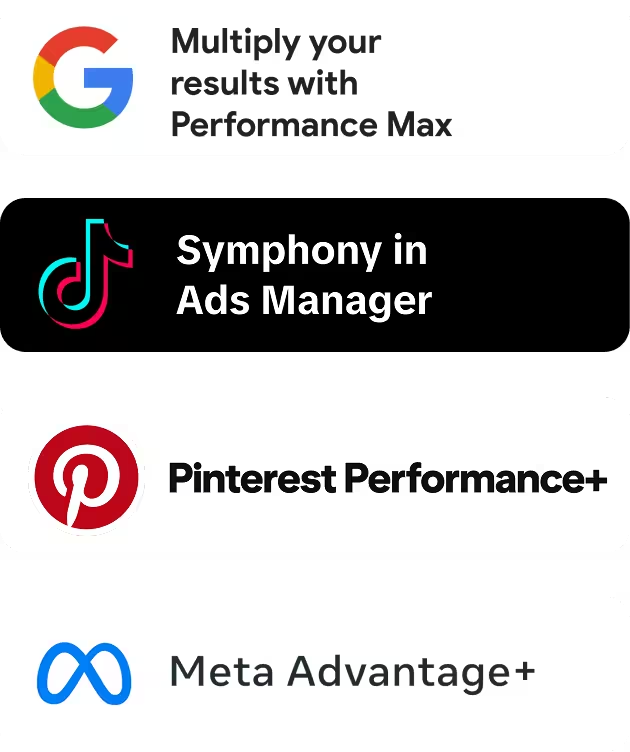
Creator content is influencing machines, and the machines are influencing how that content is delivered to audiences. Every single major platform offers and promotes their AI-powered ad delivery for smarter delivery and stronger performance optimized by AI.
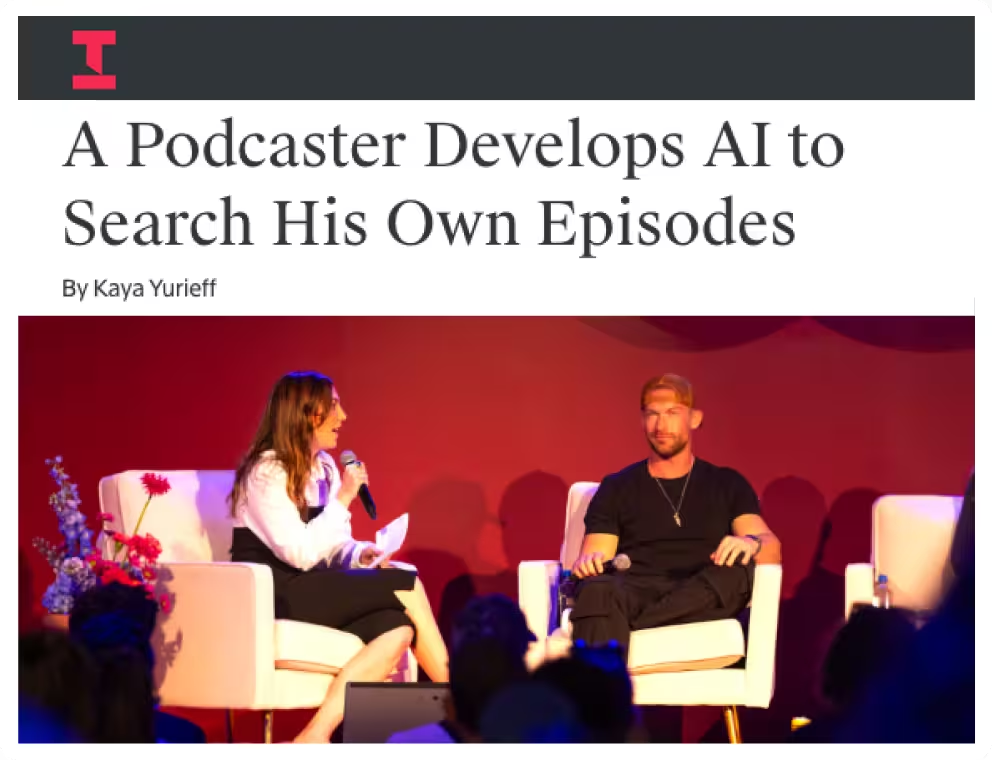
To take it one step further, we’re seeing creators starting to build their own models. Some creators are already exporting their transcripts to train personal LLMs, essentially creating AI “clones” of themselves that can interact with fans or scale their knowledge. It’s wild. The creator becomes both the input and the output.
PREDICTION
In 2026, creators will optimize for both followers and algorithms. As content becomes indexed and surfaced by AI systems, machine visibility will become a new metric of influence.
What does this mean for brands? It means that creator strategy has to evolve. In 2026, creators will optimize for both followers and algorithms. As content becomes indexed and surfaced by AI system, machine visibility will become a new metric of influence.
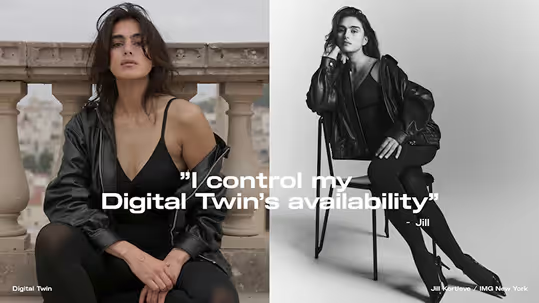
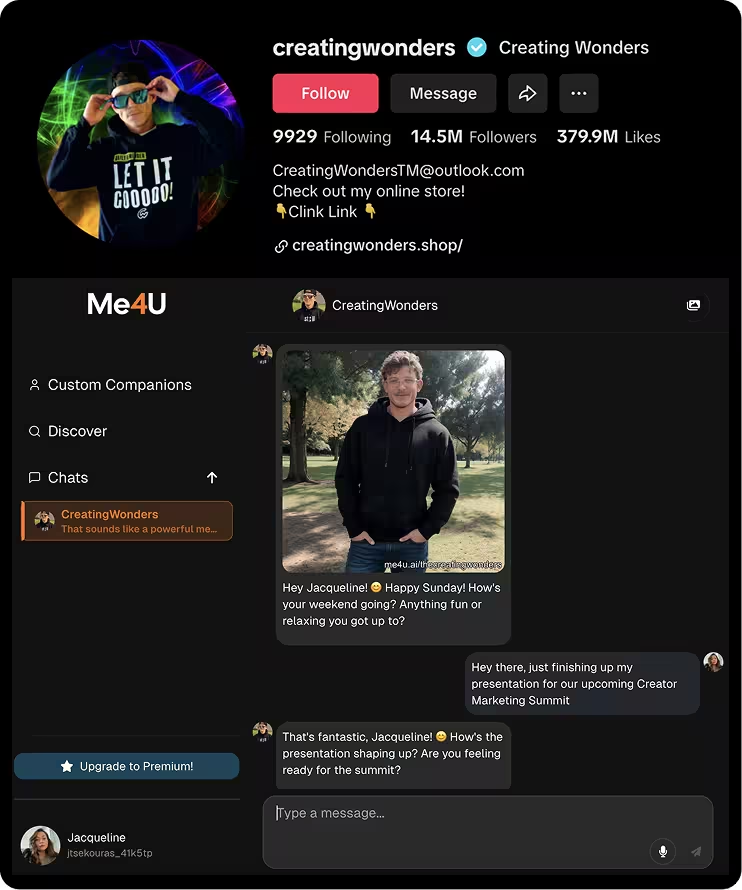
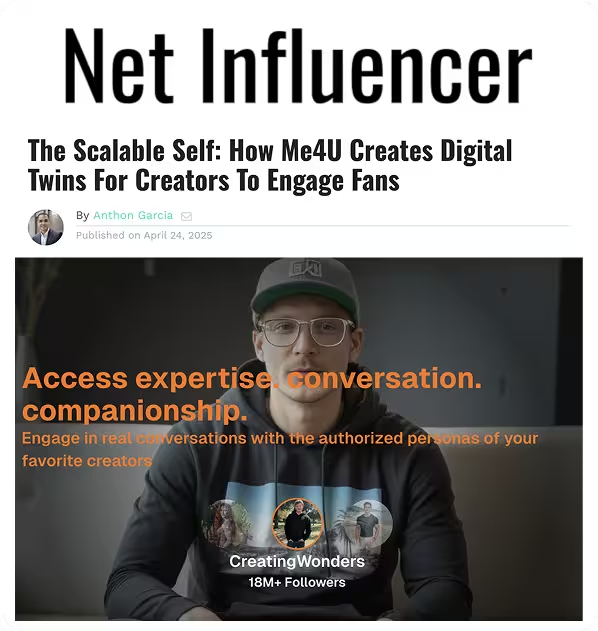
Here’s our final prediction: The next evolution of the creator economy won’t be about scaling content. It’ll be about scaling the creator. Think about it. Today, creators build content libraries. Tomorrow, they’ll build living versions of themselves—AI companions that can interact with fans, teach, and even earn revenue while they sleep.
DIGITAL TWINS IN THE WILD
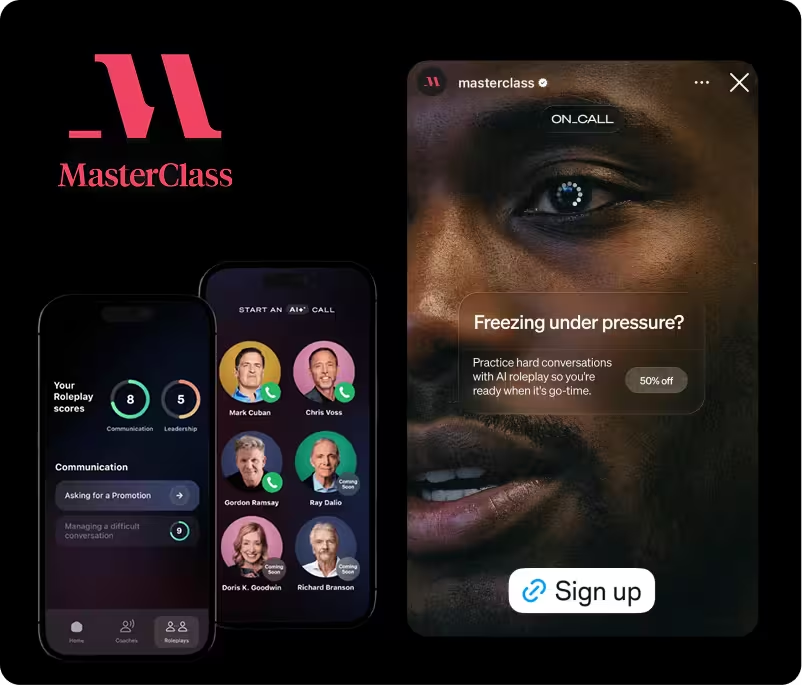
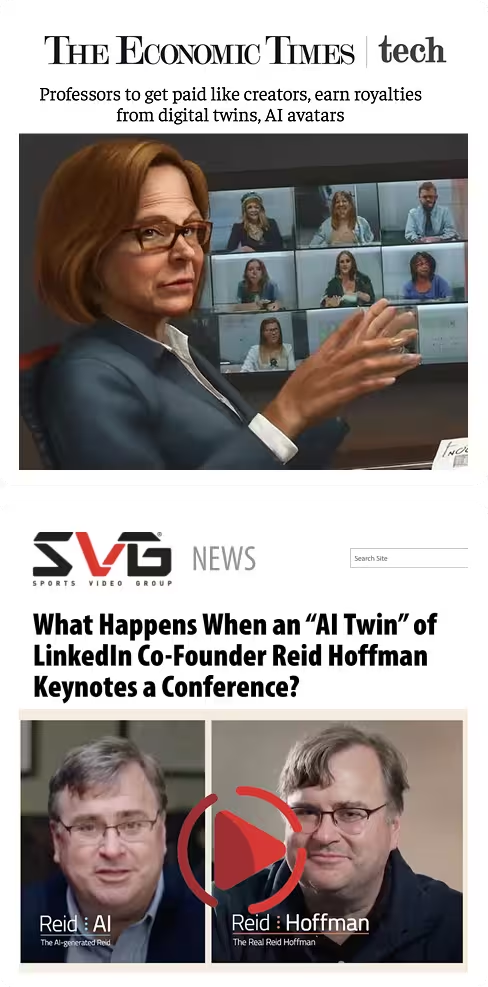
We’re already seeing the first wave of this transformation: Practice a sales pitch, interview, or business negotiation with an AI version of a top industry leader. Professors can license their voices to digital twins and getting paid royalties, like a Spotify stream, every time their AI delivers a lecture. And keynote speakers who can’t attend in person can send their AI twin.
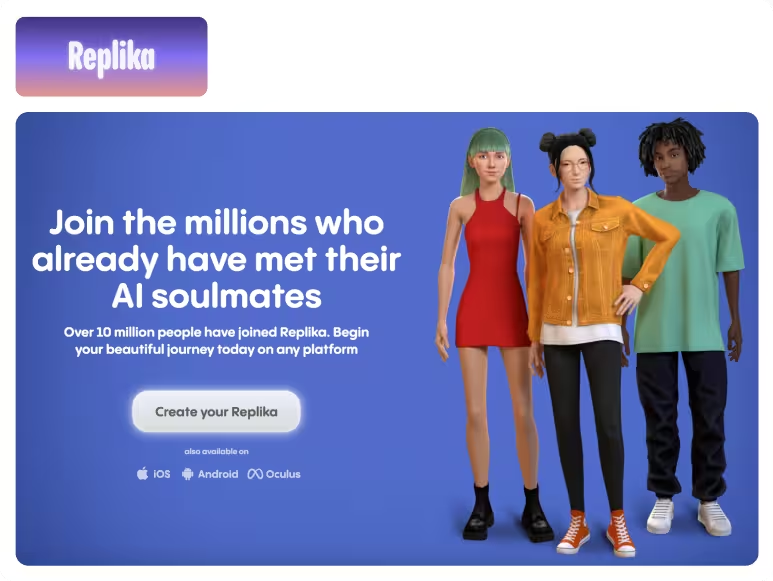
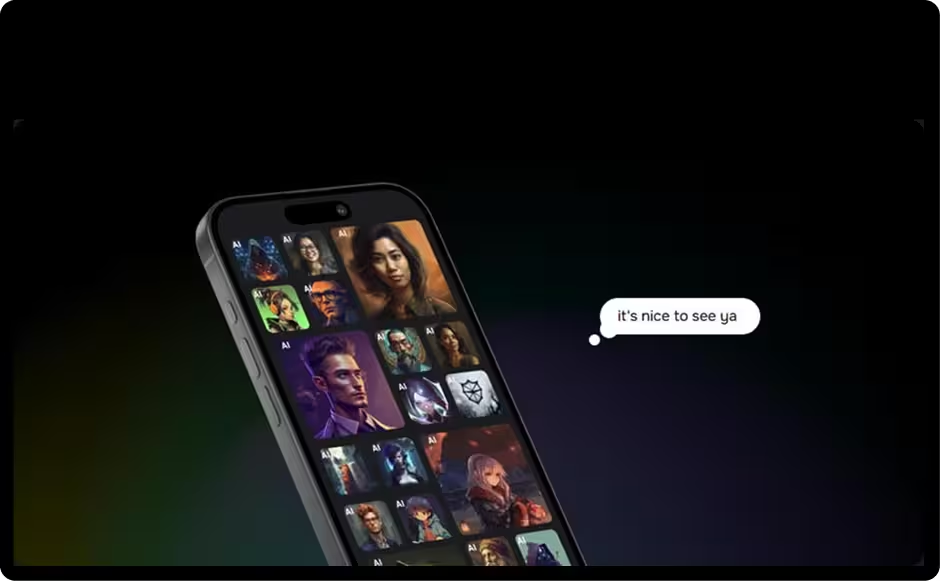
It’s not just practical use cases. The emotional side of this is just as powerful. We’re already seeing millions of people forming real relationships with AI companions on platforms like Replika and Character.ai.
Even though an AI companion isn’t real, the emotional impact can be. These experiences are blurring the line between fandom and friendship.
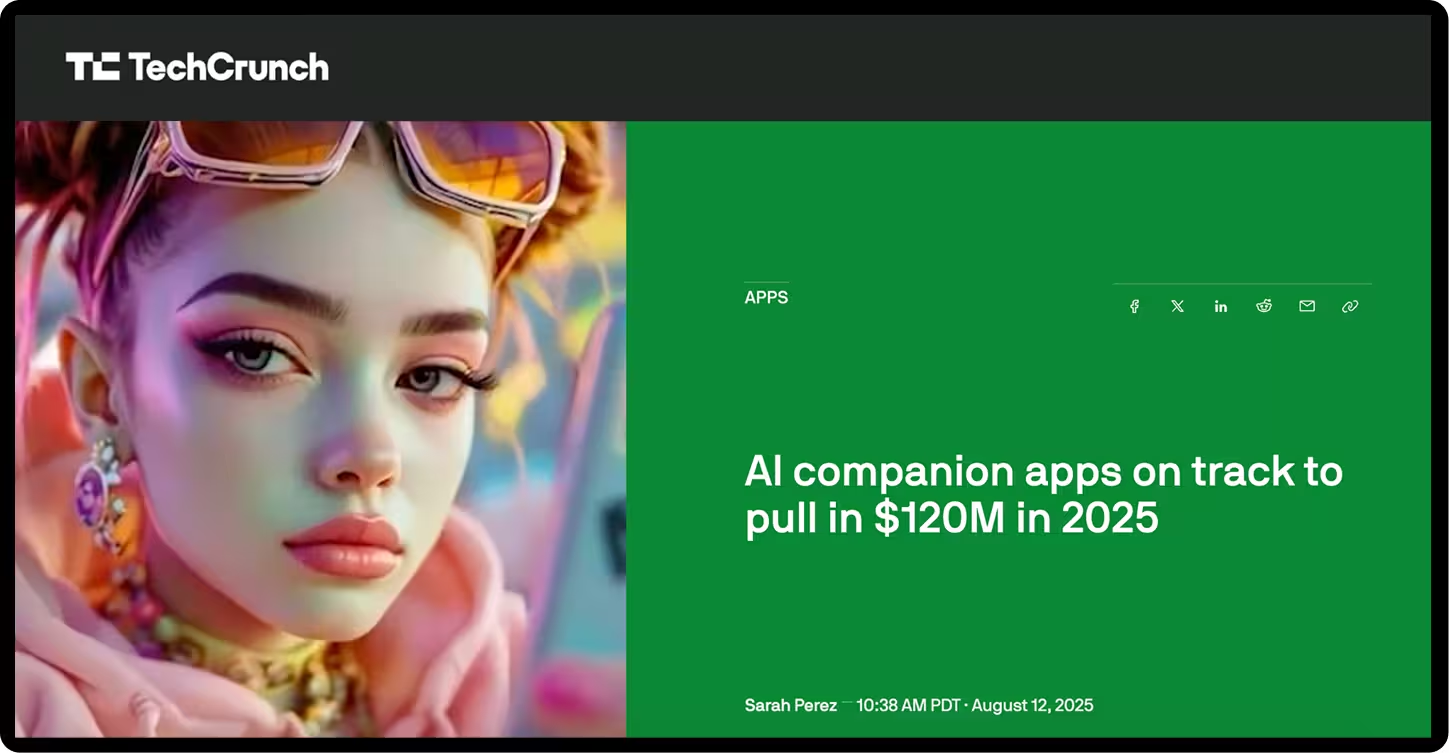
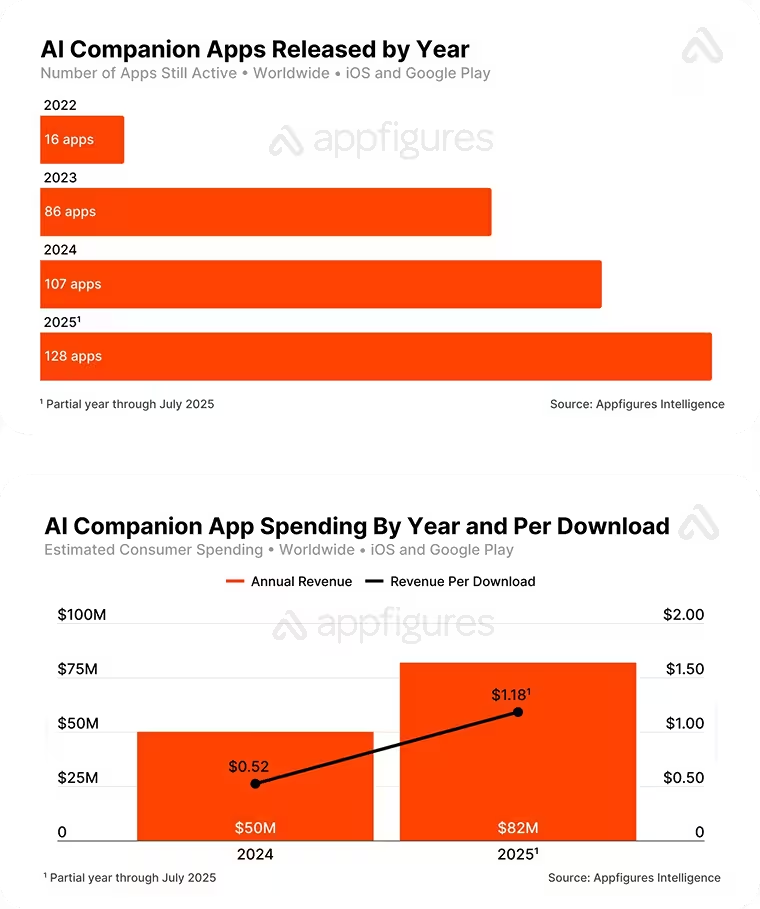
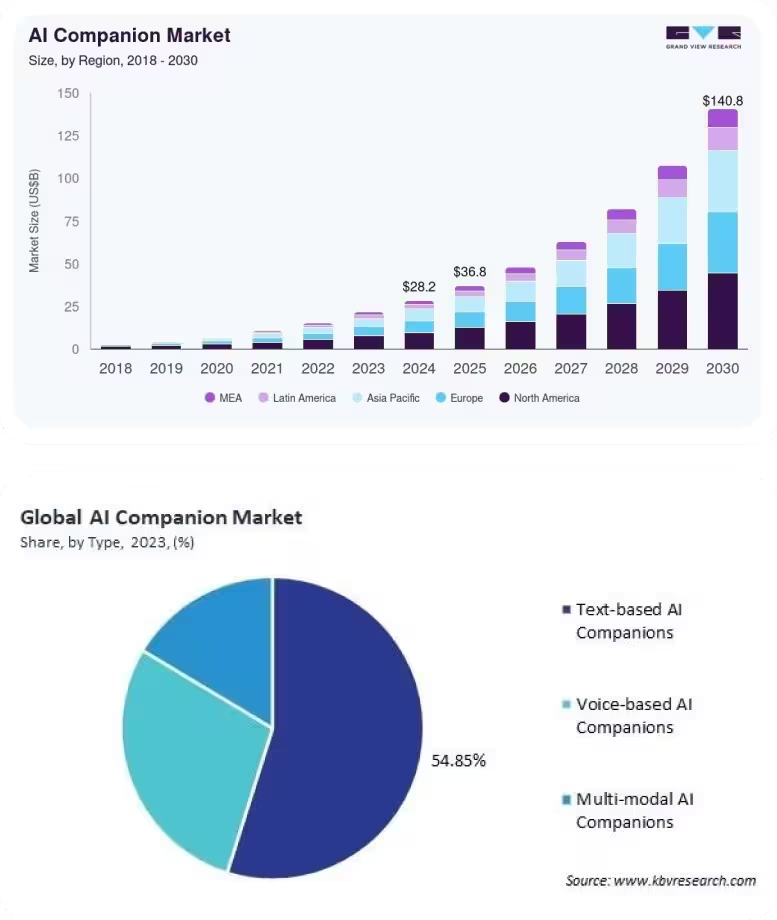
The number of AI companion apps has grown 700% since 2022, from just 16 to 128 as of this summer. And consumer spending inside these apps has doubled year over year.
The evolution is moving fast on a global level, from text-based chatbots to full voice and multi-modal companions. The more human they feel, the more powerful the connection.
We’re seeing creators themselves step into this space. They’re licensing their likeness, their voices, and even their personalities. For a lot of creators, becoming an AI companion will be the next logical step in scaling influence.
PREDICTION
There will be digital twins of our favorite creators and for millions of fans, the AI version will be the one they know best
Our final prediction: By 2026, there will be digital twins of our favorite creators, and for millions of fans, the AI version will be the one they know best. The creator economy will no longer end when the camera turns off. It will live on—teaching, entertaining, and connecting around the clock.